Bogs—the natural air conditioners of our landscape

A natural water reservoir

Intact wetlands function much like a sponge. During heavy rainfall, they absorb water and retain it in the landscape. This ensures that moisture remains available for longer during dry periods.

At the same time, the evaporation of water has a cooling effect on the immediate surroundings. Wetlands can thus help make landscapes more resilient to heat and drought.

They also play an important role during heavy rain because the water does not drain away immediately but is partially retained.

Blinklingmoos shows what renaturation can achieve

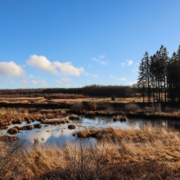
In the Blinklingmoos near Strobl on Lake Wolfgang, the natural water balance has been restored over the years. Former drainage ditches were filled in, and water is now retained in the marsh again.

The difference becomes especially apparent during dry periods: Even though the surface may appear dry, moisture is retained in the restored bog beneath it.


Austria Is Bringing Its Peatlands Back to Life

LIFE AMooRe – Austrian Moor Restoration is currently Austria's largest bog restoration project.

By 2033, measures to restore water levels and renature approximately 1,400 hectares of peatlands are to be implemented. About 40 peatland areas in all nine federal states are part of the project.

A total of 44.23 million euros has been allocated for this purpose.

There is a great need for action: Austria has approximately 44,000 hectares of peatlands. More than 90 percent of these have been adversely affected by past drainage efforts.


Small Spaces with a Big Impact

Wetlands cover only a small portion of our landscape, yet they serve several important functions at the same time.

They store water and carbon, provide habitat for specialized animal and plant species, and can help mitigate the effects of extreme weather events.

The restoration of wetlands thus demonstrates in very concrete terms what modern climate and nature conservation can achieve: restoring natural systems to full functionality and making our landscape more resilient.

The Blinklingmoos on Lake Wolfgang is a good example of this.

Sometimes part of the solution lies right under our feet.

Can biotechnology save endangered species?

Climate change is altering habitats at a pace that many animal and plant species can barely keep up with. New diseases are spreading, periods of drought are becoming more frequent, and entire ecosystems are coming under pressure. Traditional conservation efforts aim to preserve habitats, stabilize populations, and reduce harmful impacts. But what happens when these measures alone are no longer enough?

In the United Kingdom, researchers are currently exploring an approach that has so far been used primarily in medicine and agriculture: biotechnology may help wild species become more resilient to diseases and changing environmental conditions.

The British research agency ARIA (Advanced Research and Invention Agency) is providing approximately 54 million pounds for this purpose. As part of the “Accelerated Adaptation” program, various research teams are investigating how the natural adaptability of species can be specifically supported or accelerated.


Making Trees More Resistant to Disease

One focus of the research is on Europe's forests. This is because, in addition to rising temperatures and increasing drought, introduced and emerging pathogens are also taking a toll on many tree species.

Several research groups are therefore investigating how trees could be better protected against fungal diseases. One project, for example, is developing an RNA-based approach designed to target specific pathogens. Another research effort is exploring whether even mature trees can be made more resistant after the fact.

Increasing drought is also a factor. Researchers at the Royal Botanic Gardens, Kew, are investigating whether seeds can be treated in such a way that the resulting trees are better able to withstand prolonged periods of drought.


Help for Amphibians and Pollinators

It's not just plants that could benefit from these new technologies. Unconventional approaches are also being explored when it comes to animals.

One project focuses on amphibians and the dangerous chytrid fungus, which threatens numerous populations of frogs, toads, and other amphibians worldwide. The project is investigating whether genetically modified microorganisms applied to the animals’ skin can improve their resistance to the infection.

Other research teams are focusing on pollinators. Among other things, they are investigating ways to better protect wild pollinators against viral diseases. Given their importance to the reproduction of numerous wild and cultivated plants, such developments could have implications far beyond the protection of individual species.


Even moors and coastlines could benefit

However, the research is not limited to well-known animal and tree species. It also focuses on unassuming plants that are crucial to entire ecosystems.

Sphagnum mosses, for example, form an essential foundation for many peatlands. These ecosystems can store large amounts of carbon over long periods of time. A research project is therefore investigating how sphagnum mosses could be made more resilient to changing climatic conditions.

Another approach focuses on beach grass. The plant stabilizes sand dunes and thus contributes to natural coastal protection. Researchers want to find out whether its adaptation to changing environmental conditions can be accelerated.


To what extent should we interfere with nature?

In the future, targeted biotechnological interventions could prevent individual populations from collapsing due to disease, heat, or drought. At the same time, natural ecosystems are highly complex. Changes to one species can have an impact on other species and, consequently, on entire food chains.

A particularly difficult question in this context is how to assess potential long-term consequences. While many biotechnological processes can be studied under controlled conditions, the situation in the natural environment is much more complex.

ARIA takes these uncertainties into account and, in addition to biological research, also funds work on modeling, data validation, ethics, and governance. This is because, before such technologies are actually deployed in the natural environment, their potential consequences must be carefully examined.

Renewable Energy Around the Clock

No single technology solves the problem—it’s their interaction that does

A modern energy system is not based solely on wind turbines or solar panels. The key lies in the interaction of various components:

  • Solar power provides affordable electricity during the day.
  • Wind power often generates a particularly large amount of energy in the evening and at night.
  • Battery storage systems offset short-term fluctuations.
  • Pumped-storage power plants store excess energy over long periods of time.
  • Green hydrogen can store seasonal surpluses and make them available for use later.
  • Smart grids distribute energy to where it is needed at any given moment.

It is precisely this combination that makes a stable and reliable power supply possible—even when individual energy sources temporarily produce less power.

What happens during a “dark lull”?

A "dark calm" refers to weather conditions in which there is little sunshine and only light winds for several days.

However, the study shows that such situations do not pose an insurmountable problem. By combining different storage technologies, Europe-wide interconnected power grids, and more flexible energy use, even these periods can be reliably bridged. This refutes one of the most common objections to renewable energy.

Digitalization is becoming a decisive factor

In addition to wind and solar energy, digitalization is becoming increasingly important.

Modern energy management systems can coordinate electricity consumption and generation in real time. For example, electric cars tend to charge when there is a particularly high amount of solar power available. Battery storage systems store excess energy and release it exactly when it is needed.

This makes the entire energy system more efficient and stable.

When the driest desert in the world begins to bloom

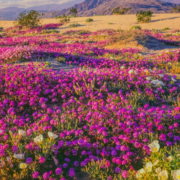
One of the driest regions on Earth is currently transforming into a vast sea of flowers. In the Atacama Desert in northern Chile, millions of plants are sprouting from the otherwise nearly barren soil following exceptionally heavy rains.

This rare natural phenomenon is called the “Desierto Florido” — the flowering desert — in Chile. In 2026, the bloom could cover a particularly large area.


Buried in the ground for years—and suddenly awakened

Beneath the surface of the Atacama lie the seeds and bulbs of about 200 different plant species. Many of them can survive long periods of drought and wait for sufficient moisture before they germinate.

These very conditions have now come to pass. Exceptionally heavy rainfall has literally shaken up parts of the region.

In some areas, more than 180 millimeters of precipitation were recorded this winter. César Pizarro of the Chilean Forestry Commission (CONAF) described these amounts as exceptionally high and unprecedented in this form.

The extra water seeps into the desert soil, creating the conditions that allow countless seeds to germinate almost simultaneously.


Up to 15,000 hectares could be in bloom

Purple, white, yellow, and pink flowers now cover large areas. Typical varieties include the purple “Pata de Guanaco” and the white “Suspiros,” among others.

According to Chilean authorities, the bloom could cover an area of up to 15,000 hectares in 2026. It is expected to peak in October.

That is equivalent to an area of about 21,000 soccer fields and illustrates just how vast this rare natural phenomenon can be.


A natural spectacle with two sides

The extraordinary rainfall doesn't just make for spectacular images. At the same time, heavy rain can cause significant damage in Chile's arid regions.

Thus, the blooming Atacama reveals two sides of extraordinary rainfall events: on the one hand, they can bring life back to a seemingly lifeless landscape, but on the other hand, they can also endanger people and infrastructure.

What is particularly fascinating is the plants’ remarkable resilience. For long periods of time, the soil appears to be virtually lifeless. In fact, beneath the surface, an entire biological reservoir lies in wait for the right conditions.

If there is enough water, a new life cycle begins within a short time. Plants germinate, bloom, and produce new seeds, which in turn can survive long dry spells in the soil.

The blooming Atacama is thus not only a spectacular natural phenomenon; it also demonstrates the strategies life uses to adapt to even the most extreme environmental conditions.

How Europe's Cities Are Reclaiming Their Streets – Mobility for Livable Urban Spaces

Paris: Streets Are to Be Transformed into Green Spaces

This transformation is particularly evident in Paris. For years, the city has been focusing on bike lanes, traffic-calmed school zones, and more green spaces along its streets.

In a public survey conducted in March 2025, approximately 66 percent of participants voted in favor of greening an additional 500 streets and redesigning them for pedestrian traffic. This is a development goal, not a measure that has already been implemented. The low turnout also shows that approval in a survey does not automatically mean there is a broad social consensus.

Nevertheless, the direction is clear: Fewer impervious surfaces and more trees are intended to do more than just change the cityscape. They can provide shade, absorb rainwater, and help alleviate the summer heat locally.

Barcelona: Neighborhoods Instead of Through-Traffic Corridors

Barcelona is taking a similar approach with its “superblocks” and green street corridors. Through traffic is restricted, while access for residents, deliveries, and necessary trips is to be maintained.

In the densely built-up Eixample neighborhood, sections of four streets—including Consell de Cent—have been transformed into green corridors. New plazas, trees, and seating areas are changing how the street space is used there: people can meet up, children have more room to play, and walking has become more pleasant.

The point isn't to make every street completely car-free. What matters is which traffic is actually necessary—and which is simply using a neighborhood as a shortcut.

Ghent: Through traffic will be rerouted

The Belgian city of Ghent shows that even changes to traffic routing can make a big difference. Since 2017, a traffic plan has divided the city center into several zones. Drivers who want to travel between these zones are generally routed via the ring road instead of driving straight through the city center.

The center will remain accessible. At the same time, it will be more difficult to use it as a through route. Direct connections for pedestrians and cyclists will remain in place.

The principle behind it is simple: A city can accommodate necessary car trips without giving all its streets over to through traffic.

Reducing traffic requires good alternatives

Changes like these don't happen on their own. If cars are simply pushed onto neighboring streets, the problem is merely shifted elsewhere. Without reliable bus and train service or safe bike lanes, everyday life becomes more difficult for many people.

Delivery drivers, caregivers, people with limited mobility, and commuters must also be taken into account. For local businesses, it’s not just the number of parking spaces that matters, but whether customers can easily access them. Whether a renovation will boost retail must be assessed on a case-by-case basis—blanket promises of success are just as unhelpful as blanket rejection.

Planetary Health Check 2026: Seven out of nine planetary boundaries have already been significantly exceeded

Planetary boundaries describe nine key processes of the Earth system. If their safe operating spaces are exceeded, the risk increases that our planet’s vital systems will undergo permanent changes.

The 2026 Planetary Health Check reveals a clear trend: Seven of the nine planetary boundaries are now outside the safe operating space. Most recently, in 2025, the boundary for ocean acidification was also exceeded.

This affects climate change, the integrity of the biosphere, changes in land use, changes in the freshwater cycle, biogeochemical cycles, the introduction of anthropogenic substances, and ocean acidification.

The situation has improved over the past decade only with regard to the ozone layer and global aerosol pollution in the atmosphere. Regarding aerosols, however, the report points out that global trends may mask regional pollution levels.


A Year of Extreme Events Highlights Growing Risks

The report examines the evolution of planetary boundaries in relation to numerous extreme events on land and in the oceans. The severity of their consequences depends not only on the climate, but also on the state of ecosystems, water availability, land use, and people’s ability to adapt to change.

In 2025, more than 6.9 million people in Pakistan were affected by monsoon floods. At the same time, the heat content of the oceans reached a new record high.

The impact is particularly evident in the oceans: From January 2023 to September 2025, approximately 84.4 percent of the world’s coral reef area was exposed to heat stress, which can trigger coral bleaching. According to the report, this was the largest event of its kind ever observed worldwide.

Europe was also affected by extreme weather conditions. In 2026, Western Europe experienced its hottest June and July on record. At the same time, severe droughts struck France, Spain, Germany, and the United Kingdom. Severe wildfires broke out in Europe and Canada. Japan, South Korea, and parts of the Middle East also recorded record-breaking temperatures.

The report’s key message: These developments should not be viewed as separate crises. Climate, water, ecosystems, land, and oceans all influence one another.


Natural Carbon Sinks Under Pressure

Natural carbon sinks play a special role. Vegetation and soils absorb a significant portion of human-caused CO₂ emissions.

However, recurring heat waves, droughts, wildfires, and damaged ecosystems can reduce this absorption. As a result, ecosystems in some regions may transform from CO₂ sinks into CO₂ sources.

The Planetary Health Check therefore also examines whether models of terrestrial carbon sequestration may be overestimating their resilience. This is relevant because the path to net-zero emissions also depends on natural carbon sinks continuing to function.


Why the planetary boundaries are interconnected

The seven boundaries that have been crossed show that environmental changes cannot be viewed in isolation from one another. For example, deforestation affects the climate and the water cycle. Rising temperatures, in turn, impact ecosystems and the oceans.

At the same time, trends in the ozone layer show that improvement is possible. International measures have helped reduce the pressure on this Earth system.

The challenge, therefore, is not merely to prevent further overshoots. In the long term, the goal is to bring the planetary boundaries that have already been exceeded back toward a safe range.


Learn More

Planetary Health Check 2026
https://www.planetaryhealthcheck.org/

Original publication: Planetary Boundaries Science (PBScience), 2026: Planetary Health Check 2026. Potsdam Institute for Climate Impact Research, Potsdam, Germany.

How much electricity and water do Europe's data centers use?

Artificial intelligence seems to operate almost effortlessly on our smartphones and computers. Behind the scenes, however, lies a massive physical infrastructure: data centers with thousands of servers, high-capacity power connections, and sophisticated cooling systems.

With the boom in artificial intelligence, this infrastructure is currently growing at a particularly rapid pace. This is also driving up the demand for electricity, water, and suitable locations.

The European Union therefore wants to gain a more accurate understanding of how efficiently Europe’s data centers actually operate. Operators of large facilities are expected to make their energy and water efficiency more transparent. There are also plans to establish a European rating system for the sustainability of data centers.


2.5 percent of Europe's electricity consumption

Data centers already account for about 2.5 percent of the European Union’s total electricity consumption. And demand is expected to continue to rise significantly.

According to current forecasts, the installed capacity of European data centers could more than double, from about 12 gigawatts in 2025 to about 28 gigawatts in 2030.

Artificial intelligence is a key driver. Not only does training large AI models require enormous computing power, but their day-to-day use also runs on high-performance servers that must be operated and cooled.


Water is also becoming an issue

Water consumption is less obvious. Servers generate large amounts of heat. As a result, many data centers use cooling systems in which water plays an important role.

The actual amount of water required depends heavily on the location, the technology used, and the cooling system. This is particularly relevant in regions where water is already in short supply.

This also gives new significance to the choice of location. In addition to fast data connectivity and sufficient electricity, the local availability of energy and water, as well as climatic conditions, are becoming increasingly important.


Waste Heat Is Converted into Energy

At the same time, data centers offer the possibility of reusing a portion of the energy they consume.

Servers continuously generate heat. This waste heat can, for example, be fed into district heating networks and used to heat homes, offices, or public buildings.

Such concepts are already being implemented in several European cities. This can turn a byproduct of digitalization—which has often gone unused until now—into a local heat source.


Efficiency Is Becoming a Competitive Advantage

The key question is not whether Europe will need data centers in the future. Digitalization, cloud services, and artificial intelligence will continue to drive up the demand for computing power.

The key factor is how this infrastructure is built and operated.

Renewable electricity, more efficient chips and servers, smart cooling systems, the use of waste heat, and suitable locations can all influence resource consumption.

The issue is also gaining importance from an economic perspective. When it comes to operating large data centers, energy is not just an environmental issue, but a significant cost factor.

The digital future is by no means intangible. Behind every AI application are real buildings, servers, and resources. The more artificial intelligence is used, the more important the efficiency of the underlying infrastructure becomes.

Why Rain Alone Won't Solve Europe's Water Problem

Why Rain Alone Won't Solve Europe's Water Problem

Why Rain Alone Won't Solve Europe's Water Problem

It's Okay for the Garden to Get Messy: Why Animals Need Fallen Leaves and Wild Corners Right Now

The first leaves are falling, the summer flowers are fading, and it’s time to tidy up the garden. But if you remove every leaf and prune back all the perennials now, you’ll also be taking away valuable hiding spots. A little autumnal clutter helps animals get through the cold season—and saves us a lot of work.

The rake is ready, the pruning shears are within reach. Tidying everything up one last time before winter arrives: For many, this is as much a part of fall as the last tomatoes and the cooler evenings.

It’s worth taking a closer look before cutting them back and discarding them. What looks to us like wilted or dead plants may provide food, shelter, or a winter home for other living creatures. A garden continues to thrive even after its colorful flowers have faded.

Fallen leaves still have a purpose

Fall leaves can be left under hedges, shrubs, and trees. They cover the ground, protect it from drying out, and moderate temperature extremes. Gradually, they decompose, returning nutrients to the natural cycle.

Numerous small animals find shelter among the leaves. The creatures that crawl and live there, in turn, serve as food for birds and other garden dwellers. Anyone who disposes of all the fallen leaves is also removing part of this habitat.

On suitable garden beds, a loose layer of leaves can also serve as soil protection. BUND Naturschutz recommends a mulch layer about three to five centimeters thick. BUND Naturschutz: Fall Garden Care

A quiet spot for the hedgehog

A sheltered spot where leaves, twigs, and some dead wood accumulate is especially valuable. Under a hedge or in a rarely used corner of the garden, this can provide a potential shelter for hedgehogs.

You don't need elaborate landscaping to do this. Materials that accumulate anyway during fall yard work can be piled up in a suitable spot. The key is to make sure this cozy spot is allowed to remain there afterward.

Once an animal has made itself at home, the pile should be left undisturbed throughout the winter. Even if a mild day here and there tempts you to keep working on it: A winter shelter is not garden waste that should be cleared away at the next opportunity. The combination of wood, brush, and leaves, in particular, provides suitable shelter for hibernating hedgehogs.

Perennials that have finished blooming can be left in place

It’s also best to exercise restraint when it comes to pruning shears. Dry stems and seed heads continue to serve important purposes: Birds can feed on the remaining seeds, while some insects overwinter in or on plant stems.

If you leave suitable perennials that have finished blooming in place until spring, you’ll be rewarded with these structural elements. In particular, plants with seed heads and hollow stems should therefore not be automatically cut back during fall cleanup.

And there’s something for the eye to enjoy, too: grasses silhouetted against the light, dark seed heads, and later, perhaps, hoarfrost on dry flowers. The garden changes its appearance. It doesn’t have to be empty in winter.

Where Tidying Up Is Still a Good Idea

Of course, not every path has to be covered in leaves. Wet leaves should be removed from stairs and high-traffic areas to prevent anyone from slipping. A thick, persistently damp layer of leaves on the lawn is also undesirable.

The raked-up material can then be reused under shrubs or in a sheltered corner. For smaller garden areas, a rake and a broom are usually sufficient. Leaf blowers, on the other hand, can suck up small animals along with the leaves and injure them.

This way, manicured paths and wild areas can coexist without any problems. Even a deliberately left-unplanted edge changes how much space the garden allows for its animal inhabitants.

This fall, it's okay to leave some things as they are

Perhaps the change begins in a single corner: under the hedge, behind the raised bed, or along the fence. The leaves are left there. Next to them, a few perennials are allowed to keep their seeds.

It doesn't cost much and, above all, just requires us to skip a familiar routine every now and then. Before we get everything ready for winter in the fall, we can ask ourselves: Who might need exactly what I'm about to put away?

Join Now

Weiterdenker 2.0 brings together current topics related to the future, digital education, and concrete opportunities to get involved on a single platform.