
Renewable Energy Around the Clock
Renewable Energy Around the Clock
Many people ask themselves the same question: What actually happens when the sun isn’t shining at night and there’s hardly any wind?
A new study by the Fraunhofer Institute for Solar Energy Systems (ISE) addresses precisely this question; it was presented in June 2026 at Europe’s largest energy trade fair, The smarter E Europe. The conclusion: A reliable, round-the-clock power supply using renewable energy is technically feasible—provided that different technologies work together intelligently.
No single technology solves the problem—it’s their interaction that does
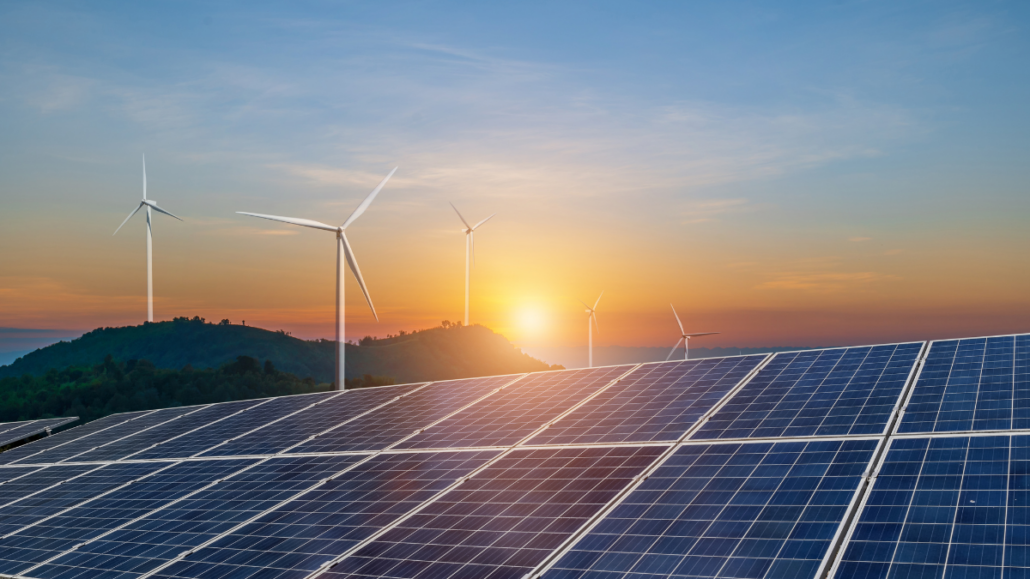
A modern energy system is not based solely on wind turbines or solar panels. The key lies in the interaction of various components:
- Solar power provides affordable electricity during the day.
- Wind power often generates a particularly large amount of energy in the evening and at night.
- Battery storage systems offset short-term fluctuations.
- Pumped-storage power plants store excess energy over long periods of time.
- Green hydrogen can store seasonal surpluses and make them available for use later.
- Smart grids distribute energy to where it is needed at any given moment.
It is precisely this combination that makes a stable and reliable power supply possible—even when individual energy sources temporarily produce less power.
What happens during a “dark lull”?
A "dark calm" refers to weather conditions in which there is little sunshine and only light winds for several days.
However, the study shows that such situations do not pose an insurmountable problem. By combining different storage technologies, Europe-wide interconnected power grids, and more flexible energy use, even these periods can be reliably bridged. This refutes one of the most common objections to renewable energy.
Digitalization is becoming a decisive factor
In addition to wind and solar energy, digitalization is becoming increasingly important.
Modern energy management systems can coordinate electricity consumption and generation in real time. For example, electric cars tend to charge when there is a particularly high amount of solar power available. Battery storage systems store excess energy and release it exactly when it is needed.
This makes the entire energy system more efficient and stable.
The Energy Supply of the Future
A reliable power supply based on renewable energy does not depend on the sun shining or the wind blowing at all times and everywhere.
What matters is an energy system in which different generation technologies, storage systems, power grids, and digital control systems work together intelligently.
The technical foundation for this is already in place. The task now is to systematically expand the necessary infrastructure and integrate the individual components into a high-performance overall system. As a result, the energy supply of the future will not only be more renewable, but also more interconnected, more flexible, and smarter.
Related link: The smarter E Europe – Europe’s energy trade fair
According to Fraunhofer ISE, how can a reliable electricity supply using renewable energy be ensured even during periods of low sunlight and low wind?
You can answer this question. Sign in to earn points.