Why Rain Alone Won't Solve Europe's Water Problem
Why Rain Alone Won't Solve Europe's Water Problem

Why Rain Alone Won't Solve Europe's Water Problem
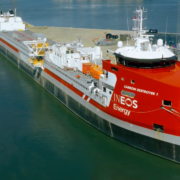
Europe is taking a new step forward in carbon dioxide storage. In Denmark, “Greensand Future”—the European Union’s first commercial, fully integrated offshore CO₂ storage chain—has been launched.
The process works as follows: CO₂ is captured, liquefied, transported to the port of Esbjerg, and then shipped to the North Sea on a vessel designed specifically for this purpose. There, it is pumped into a former oil reservoir about 1,800 meters below the seabed and stored permanently.
What has long been tested primarily in pilot projects is now set to be implemented on an industrial scale within the EU for the first time.
From CO₂ Emissions to Storage Under the North Sea
In the first phase, the CO₂ comes primarily from Danish biomethane and biogas plants. After capture, it is liquefied and transported by truck to the new CO₂ terminal in the Port of Esbjerg.
From there, a special transport vessel takes over. The destination is the former Nini West oil field in the Danish North Sea. The CO₂ is ultimately injected deep beneath the seabed via the existing offshore infrastructure.
The geological storage site was already evaluated during a pilot project. The technical review of the storage site was conducted by, among others, the independent inspection agency DNV.
Up to 400,000 metric tons per year
In the first commercial phase, Greensand can store up to approximately 400,000 metric tons of CO₂ per year. The EU-supported project initially aims to store a total of approximately 2.4 million metric tons over eight years.
In the long term, much larger scales are planned. If there is sufficient demand and the infrastructure is further expanded, capacity could increase to four to eight million metric tons of CO₂ per year.
The European Union is providing Greensand Future with 41 million euros from the Innovation Fund.
Why store CO₂ at all?
Carbon Capture and Storage—CCS for short—is intended primarily for use in situations where it is technically difficult to completely avoid CO₂ emissions.
These include, for example, parts of the cement, lime, chemical, and steel industries. Even in the renewable energy sector, some industrial processes continue to generate CO₂ emissions.
In addition to renewable energy, energy efficiency, and electrification, the EU is therefore increasingly focusing on carbon capture and storage. By 2030, the EU aims to establish storage capacity for at least 50 million metric tons of CO₂ per year.
CCS Remains Controversial
However, this technology is no substitute for preventing emissions.
CO₂ must first be captured, liquefied, transported, and then permanently stored at great expense. This requires additional energy, infrastructure, and significant investment.
Critics also fear that an excessive focus on CO₂ storage could delay the necessary transition to lower-emission production processes.
Proponents, on the other hand, view CCS as a key component of those industrial processes in which emissions cannot be completely avoided for the foreseeable future.
Facts & Figures
• Greensand Future to open on September 18, 2026, in Denmark
• The EU's first commercial, fully integrated offshore CO₂ storage chain
• Storage approximately 1,800 meters below the seafloor
• Up to approximately 400,000 metric tons of CO₂ storage capacity per year in the first phase
• Approximately 2.4 million metric tons of planned storage over eight years
• Long-term potential of four to eight million metric tons of CO₂ per year
• 41 million euros in funding from the EU Innovation Fund
• EU target: at least 50 million metric tons of annual CO₂ injection capacity by 2030
Conclusio
Greensand marks a significant milestone: For the first time in the European Union, a technology that has been tried and tested over many years is giving rise to a commercial infrastructure that integrates CO₂ capture, transport, and permanent storage.
Whether CCS can make a significant contribution to European climate neutrality will, however, depend on how quickly the technology can be scaled up, what costs are involved, and where it is actually deployed.
After all, preventing CO₂ from being produced in the first place remains the most effective solution.
For those emissions that are technically difficult to avoid, however, part of the solution could lie deep beneath the North Sea.
More information: https://greensandfuture.com/

White chalk cliffs overlooking the Baltic Sea, majestic beech forests, kilometers of beaches, and tranquil Bodden landscapes: Rügen is one of Germany’s best-known natural regions. Germany’s largest island is also a place full of contrasts. On the one hand, there are historic seaside resorts and popular beaches; on the other, national parks, wetlands, and coastal landscapes where nature still sets the pace.
It is precisely this combination that makes Rügen particularly appealing for sustainable travel. After all, the key question is: How can a popular vacation destination benefit economically from tourism without endangering the very natural environment that draws people to the island in the first place?
Jasmund National Park is located in the northeastern part of Rügen. Covering about 3,000 hectares, it is one of Germany’s smallest national parks, yet its landscape is among the most impressive. Its most famous landmark is the Königsstuhl, a massive chalk cliff formation towering high above the Baltic Sea.
The true ecological treasure lies just beyond. The Jasmund Peninsula is home to ancient beech forests, parts of which are included in the UNESCO World Natural Heritage Site “Ancient and Primeval Beech Forests of the Carpathians and Other Regions of Europe.” Here, visitors can observe how a forest develops when natural processes are given more room to take hold. Deadwood is left lying on the ground; fungi and insects decompose it, thereby creating the foundation for new life.
Even the famous chalk cliffs are not a static backdrop. Wind, rain, frost, and the surf are constantly eroding the rock, and natural collapses occur time and again. It is precisely this dynamic that is part of the landscape. Sustainable tourism therefore also means respecting barriers and accepting that nature cannot be controlled or preserved for human purposes everywhere.
Many vacationers travel to Rügen by car, which leads to heavy traffic, especially during the peak season. Yet the island offers excellent conditions for a vacation using public transportation.
Long-distance and regional trains run to destinations including Bergen on Rügen and Binz. From there, you can continue your journey by bus, train, or bicycle. One highlight is the “Rasende Roland,” a historic narrow-gauge railway that connects several well-known vacation destinations.
If you choose your accommodations wisely, you can spend much of your vacation without needing a car. This makes particular sense on an island: Space is limited, and additional roads or parking lots take up land that is also important for nature, agriculture, or the local population.
Many people associate Rügen primarily with beach vacations. But the island is also ideal for hiking and biking. Tours through the beech forests of Jasmund, along the Bodden landscapes, or through quieter stretches of coastline are particularly charming.
Even well-known destinations like Cape Arkona can be combined with longer walks or bike rides. If you take the time, you’ll discover small villages, tree-lined avenues, fields, wetlands, and quiet coastal areas away from the tourist centers. It is precisely there that Rügen reveals a character that you’d hardly notice on a quick tour.
A bicycle is ideal for this. The distances between many places are manageable, and e-bikes further extend the range. For a heavily visited island, a good network of bike paths is therefore much more than just a recreational option—it’s part of a sustainable mobility strategy.
Rügen has a long tradition of tourism. Binz, Sellin, and Göhren, in particular, shape the island’s well-known image with their historic seaside resort architecture. Hotels, guesthouses, and vacation rentals are an important economic factor, but at the same time, the question of the limits of further growth arises here as well.
New accommodations require land, energy, water, and infrastructure. Sustainable tourism should therefore place greater emphasis on utilizing existing buildings, making them energy-efficient, and promoting regional economic cycles. Family-run guesthouses, smaller hotels, and vacation farms can play an important role in this regard.
What matters is not just how many people stay overnight on the island, but how much of their vacation spending actually stays in the region.
Naturally, the island’s location by the sea also shapes its cuisine. Fish is a traditional part of Rügen’s culinary heritage, but sustainable enjoyment today requires a closer look at origin, fishing methods, and the status of the respective fish stocks.
In addition, the island has much more to offer in terms of cuisine. Sea buckthorn is processed into juices, jams, and other specialties, and local farms produce potatoes, vegetables, meat, dairy products, and grains. Farm stands and regional markets allow visitors to shop directly from producers.
This makes food an integral part of sustainable travel: Short distances reduce the need for transportation, while at the same time ensuring that more economic value remains with the people who live and work on the island.
While the chalk cliffs appear in almost every travel photo, other habitats often remain in the background. Bodden waters, reed beds, marshes, and wet meadows are at least as valuable ecologically. They provide food and refuge for numerous bird species and play an important role during bird migration.
Bog landscapes are of particular importance. Intact bogs can store large amounts of carbon. If they are drained, however, carbon that has been sequestered for a long time can be released as a greenhouse gas. Protecting and rewetting such areas therefore directly links species conservation and climate protection.
Rügen illustrates particularly clearly why tourism success should not be measured solely by rising visitor numbers. An island has limited resources. Transportation, drinking water, wastewater, energy, housing, and available land cannot be expanded indefinitely.
It is especially during peak season that it becomes clear how quickly popularity can become a burden. A sustainable strategy must therefore spread visitors more evenly throughout the year and across the island. Longer stays, traveling outside of peak season, public transportation, and greater involvement of local businesses can all contribute to this.
A vacation in the spring or fall offers an added appeal. In the spring, forests and coastal landscapes come to life; in the fall, the foliage of the old beech forests changes color, and numerous migratory birds are on the move. At the same time, hotels, restaurants, and other businesses benefit from a longer season, rather than having to concentrate their revenue into just a few summer weeks.
For an island, the consequences of climate change are particularly significant. Long-term sea-level rise, storm surges, and changing precipitation patterns affect coastlines, nature, and agriculture.
Coasts, however, have always been dynamic landscapes. Beaches change, cliffs erode, and currents shift sediments. The challenge lies in deciding where infrastructure must be protected and where natural coastal evolution can be allowed to take its course.
Here, too, a fundamental principle of sustainable development becomes apparent: Not every change in nature can be prevented. In the long run, adaptation may make more sense than attempting to permanently preserve landscapes in a specific state.
Rügen is much more than just chalk cliffs and beach vacations. Ancient beech forests, dynamic coastlines, Bodden landscapes, moors, traditional seaside resorts, and a cultural landscape that has evolved over centuries make the island exceptionally diverse.
It is precisely this diversity that we must preserve. That’s why traveling sustainably on Rügen doesn’t mean giving up on experiences. It means traveling differently: arriving by train and bus, riding a bike, supporting local businesses, respecting sensitive natural areas, and perhaps staying one day longer.
This gives rise to a form of tourism that doesn't involve consuming as many sights as possible in the shortest amount of time. Instead, a place regains what is often missing in modern travel: time.
More information: https://www.ruegen.de/
Next Episode: Ausseerland Salzkammergut—lakes, alpine pastures, living traditions, and the question of why preserving regional culture is also part of sustainable travel.

The first leaves are falling, the summer flowers are fading, and it’s time to tidy up the garden. But if you remove every leaf and prune back all the perennials now, you’ll also be taking away valuable hiding spots. A little autumnal clutter helps animals get through the cold season—and saves us a lot of work.
The rake is ready, the pruning shears are within reach. Tidying everything up one last time before winter arrives: For many, this is as much a part of fall as the last tomatoes and the cooler evenings.
It’s worth taking a closer look before cutting them back and discarding them. What looks to us like wilted or dead plants may provide food, shelter, or a winter home for other living creatures. A garden continues to thrive even after its colorful flowers have faded.
Fall leaves can be left under hedges, shrubs, and trees. They cover the ground, protect it from drying out, and moderate temperature extremes. Gradually, they decompose, returning nutrients to the natural cycle.
Numerous small animals find shelter among the leaves. The creatures that crawl and live there, in turn, serve as food for birds and other garden dwellers. Anyone who disposes of all the fallen leaves is also removing part of this habitat.
On suitable garden beds, a loose layer of leaves can also serve as soil protection. BUND Naturschutz recommends a mulch layer about three to five centimeters thick. BUND Naturschutz: Fall Garden Care
A sheltered spot where leaves, twigs, and some dead wood accumulate is especially valuable. Under a hedge or in a rarely used corner of the garden, this can provide a potential shelter for hedgehogs.
You don't need elaborate landscaping to do this. Materials that accumulate anyway during fall yard work can be piled up in a suitable spot. The key is to make sure this cozy spot is allowed to remain there afterward.
Once an animal has made itself at home, the pile should be left undisturbed throughout the winter. Even if a mild day here and there tempts you to keep working on it: A winter shelter is not garden waste that should be cleared away at the next opportunity. The combination of wood, brush, and leaves, in particular, provides suitable shelter for hibernating hedgehogs.
It’s also best to exercise restraint when it comes to pruning shears. Dry stems and seed heads continue to serve important purposes: Birds can feed on the remaining seeds, while some insects overwinter in or on plant stems.
If you leave suitable perennials that have finished blooming in place until spring, you’ll be rewarded with these structural elements. In particular, plants with seed heads and hollow stems should therefore not be automatically cut back during fall cleanup.
And there’s something for the eye to enjoy, too: grasses silhouetted against the light, dark seed heads, and later, perhaps, hoarfrost on dry flowers. The garden changes its appearance. It doesn’t have to be empty in winter.
Of course, not every path has to be covered in leaves. Wet leaves should be removed from stairs and high-traffic areas to prevent anyone from slipping. A thick, persistently damp layer of leaves on the lawn is also undesirable.
The raked-up material can then be reused under shrubs or in a sheltered corner. For smaller garden areas, a rake and a broom are usually sufficient. Leaf blowers, on the other hand, can suck up small animals along with the leaves and injure them.
This way, manicured paths and wild areas can coexist without any problems. Even a deliberately left-unplanted edge changes how much space the garden allows for its animal inhabitants.
Perhaps the change begins in a single corner: under the hedge, behind the raised bed, or along the fence. The leaves are left there. Next to them, a few perennials are allowed to keep their seeds.
It doesn't cost much and, above all, just requires us to skip a familiar routine every now and then. Before we get everything ready for winter in the fall, we can ask ourselves: Who might need exactly what I'm about to put away?
Terms such as “climate-neutral,” “environmentally friendly,” and “sustainable” have long since become key selling points. However, it is not always clear what such claims actually mean. New regulations are intended to change this and ensure that environmental advertising becomes more understandable, verifiable, and credible in the future.
Starting September 27, 2026, stricter requirements for environmental and sustainability claims will take effect in Austria. These requirements are based on the European EmpCo Directive, which is intended to better protect consumers from misleading business practices.
In the future, general claims such as “green,” “ecological,” or “environmentally friendly” may no longer be used without a verifiable basis. Companies must be able to clarify what their claims refer to and how they are substantiated.
For example, a product may not be advertised as environmentally friendly solely because a single component was produced in a more sustainable manner. What matters is the impression the overall presentation creates among consumers.
Claims such as “climate-neutral” are also coming under increasing scrutiny. Statements that rely exclusively on the purchase of CO₂ credits or other offset measures are particularly problematic. This can create the misleading impression that a product itself causes no emissions or fewer emissions.
The number of green labels and environmental labels has also risen sharply in recent years. Many of them look official, but are based on criteria developed by the companies themselves or are virtually impossible for consumers to verify.
In the future, sustainability labels may generally be used only if they are based on a recognized certification system or have been introduced by a government agency. This is intended to strengthen credible labels and curb the use of made-up labels.
Promises for the future must be verifiable
Many companies promote long-term goals such as “climate neutral by 2040” or “net zero by 2050.” Such announcements are, in principle, still possible. However, they must be based on a transparent and publicly available plan.
This includes concrete measures, measurable interim goals, and an independent review of progress. Mere statements of intent without a reliable path to implementation should no longer be allowed to be marketed as sustainability achievements.
The new rules do not mean that companies are no longer allowed to talk about their environmental performance. On the contrary: Companies that save energy, reduce emissions, make products more repairable, or recycle materials can continue to communicate these achievements.
In the future, the difference will lie more in the ability to provide evidence. Companies that already operate transparently and document their progress will have an advantage over those that use sustainability primarily as a marketing pitch.
It will also become easier for consumers to compare products and companies. Environmental claims should rely less on appealing colors, images, and catchphrases—and more on verifiable facts.
Greenwashing doesn’t just harm consumers. It also undermines those companies that actually invest in climate protection, the circular economy, and sustainable production. When nearly every product can be labeled “green,” the term loses its value.
The new guidelines can therefore lead to greater fairness. They do not yet create a sustainable economy, but they do change the rules governing how it operates.
Those who act in a genuinely sustainable manner have no reason to fear stricter requirements. On the contrary: when green promises become verifiable, real progress regains its importance.